











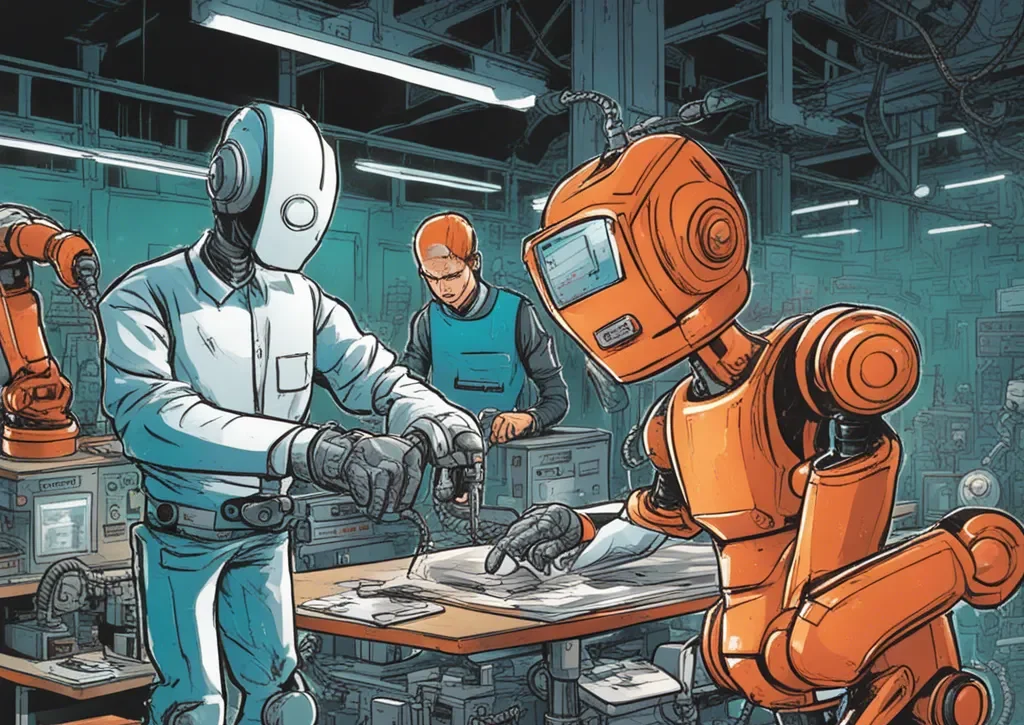
Collaborative robots, or cobots, are transforming industries worldwide by redefining how humans and machines interact in the workplace. Unlike traditional industrial robots, which typically operate separately from human workers due to safety concerns, cobots are designed to work alongside people, enhancing productivity and complementing human skills. This ability to safely collaborate with humans is making cobots increasingly crucial in today’s rapidly changing industrial landscape.
What Are Cobots?
Cobots are a type of robot engineered to operate in close proximity to humans, often without the need for protective barriers or cages. Equipped with advanced sensors, machine learning algorithms, and other technologies, cobots can detect human presence and respond in ways that prevent collisions and injuries. They are generally smaller, more adaptable, and easier to program than traditional robots, making them suitable for a wide range of tasks across different sectors.
Unlike conventional robots that require extensive programming and space to perform repetitive tasks, cobots are user-friendly and can be seamlessly integrated into existing workflows. They are particularly useful in environments where precision, flexibility, and safety are critical, such as assembly lines, quality inspection, material handling, and even service roles in healthcare and retail.
Why Are Cobots Gaining Importance?
Enhanced Safety and Collaboration:
A key reason for the growing importance of cobots is their focus on safety and collaboration. Traditional robots are confined to fenced-off areas to prevent accidental contact with humans, which limits their use. In contrast, cobots are built with safety features such as force-limiting technology that halts their operation if they come into contact with a person. This allows cobots to work directly alongside human workers, enabling safer collaboration and reducing the risk of workplace injuries.
Boosting Productivity and Efficiency:
Cobots enhance productivity and efficiency by taking on repetitive and mundane tasks, freeing human workers to concentrate on more complex, creative work that requires problem-solving and critical thinking. In manufacturing, for example, cobots can handle tasks like screwing, welding, and painting, while humans focus on quality control and innovation. This collaborative approach accelerates production processes, improves product quality, and reduces error rates.
Flexibility and Ease of Use:
Cobots are designed to be flexible and user-friendly, unlike traditional robots that are often bulky and require significant expertise to program and deploy. Cobots can be quickly reprogrammed and repurposed for different tasks, making them highly adaptable to changing production needs. This flexibility is particularly advantageous for small and medium-sized enterprises (SMEs) that need to be agile and responsive to market demands but may lack the resources for large-scale automation.
Cost-Effectiveness:
Cobots offer a cost-effective solution for businesses looking to automate processes without significant financial investment. Traditional automation systems typically involve high upfront costs for equipment, installation, and programming. In contrast, cobots have lower entry costs and can be deployed incrementally as needed, making automation accessible to businesses of all sizes and helping them stay competitive in the global market.
Addressing Labor Shortages:
As many countries face aging populations and declining birth rates, labor shortages are becoming a significant challenge, especially in manufacturing and logistics. Cobots provide a solution by handling repetitive and physically demanding tasks that are increasingly difficult to fill with human workers. By augmenting the workforce, cobots help companies maintain productivity and continue growing, even in the face of labor shortages.
The Future of Cobots
With ongoing technological advancements, cobots are expected to become even more sophisticated, featuring improved sensors, enhanced decision-making capabilities, and better learning algorithms. These improvements will enable cobots to perform more complex tasks and collaborate even more closely with humans. As industries continue to adopt automation to increase efficiency, safety, and productivity, the role of cobots will likely expand, making them an integral part of the modern workplace.
In conclusion, cobots are reshaping the automation landscape by offering a safer, more adaptable, and cost-efficient alternative to traditional robots. Their ability to work alongside humans, adapt to various tasks, and boost overall productivity makes them increasingly vital in today’s dynamic industrial environment. As companies seek innovative ways to optimize their operations and tackle challenges like labor shortages and evolving market demands, cobots are set to play a pivotal role in the future of work.